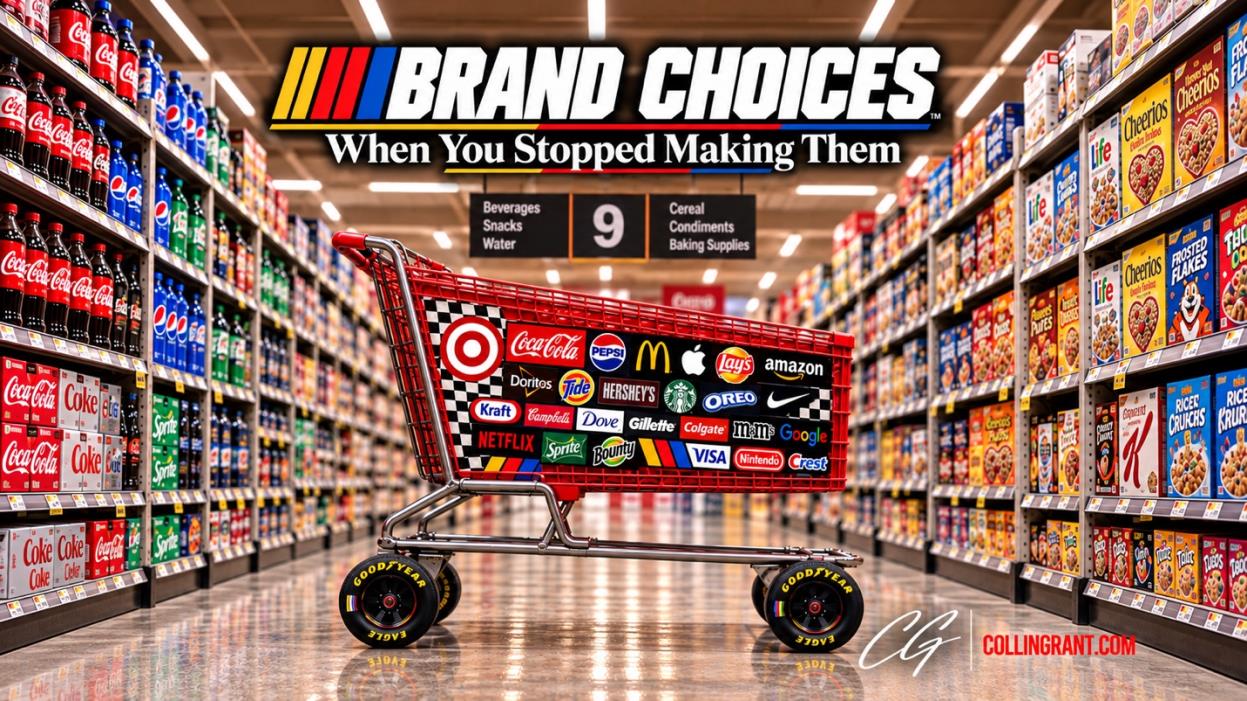
I don’t know when I stopped making all of my brand choices. But I know when I stopped making one of them.
I was born in Chicago and grew up a Pepsi guy. Then I moved to Atlanta. “I’ll have a Pepsi.” “We only serve Coke. Is that okay?” Sure.
Coca-Cola is the hometown hero here, and Coke is everywhere. I heard that question enough, drank enough Coke and eventually stopped asking for Pepsi. I was trained to stop asking.
Today, I’m a Coca-Cola guy. Pepsi is the other team now. Somewhere along the way, Coke switched me. Then it did something even more valuable: it settled the decision.
I can trace that one. Most of my brand choices? I probably couldn’t tell you when I stopped making them. Maybe you can’t either. But whether we remember when it happened or not, at some point we stopped choosing.
We Learn So We Don’t Have to Relearn
Humans learn so we don’t have to relearn. Imagine having to reconsider every restaurant, toothpaste, pair of shoes, phone, car, guitar or bottle of ketchup from scratch every time you bought one. We’d never get anything done.
Brands live in that same machinery. A logo, a color, a package, an advertisement, something your parents bought, a brand you’ve seen a thousand times, something a friend recommended or something you tried once and liked can all plant little memory seeds. I think of those memories almost like bookmarks. They give our brains somewhere familiar to return when the category becomes relevant again.
Racing makes the idea easy to see. Brands spend enormous amounts putting their names on cars, drivers, tracks and broadcasts, but nobody expects you to see a logo fly past at 200 mph and immediately run out to buy something. They’re planting seeds and leaving bookmarks. The race happens Sunday. The cart might happen Tuesday—or years later, when a category suddenly becomes relevant and a familiar name is already waiting for you.
Then experience starts doing the heavier lifting.
Coca-Cola has spent generations teaching us what Coke tastes like. Before we even crack the can or pop the top and take the first sip, we already know what is supposed to happen. The package, the sound, the carbonation and the flavor confirm something we’ve experienced before. Consistency is what trust tastes like.
New Coke demonstrated just how powerful that accumulated expectation had become—and where trust could be lost. Coca-Cola changed the answer to a question millions of customers had stopped asking. The experience no longer matched the belief, and suddenly customer tolerance was being tested. A settled decision became unsettled. People had to think about Coke again.
Their experience had already taught them what to believe.
The Belief Produced the Purchase
I recently went shopping for a wireless lav mic for video shoots. I know microphones and wireless audio, but I hadn’t spent much time shopping this particular application. So I did what most of us do when we enter unfamiliar territory: I looked at what everybody else was doing.
DJI was everywhere. Creators were using it. Reviews were strong. The features were impressive. The bundles made sense. Nearly every signal I encountered said I should probably buy DJI.
I bought Sennheiser.
DJI didn’t fail to market to me. Quite the opposite. They earned serious consideration. But I had sold and used Sennheiser products for years. Those experiences had already established something. I knew what I expected from the brand, and I trusted that expectation enough to carry it into an application I hadn’t purchased before.
When it came time to spend my own money, the purchase didn’t establish the belief. The belief produced the purchase.
And all those previous experiences had been doing something else along the way. They had been making deposits.
The Equity Account
Brand equity may be the real prize in all of this. Awareness gets you recognized. Marketing can get you considered. A purchase gets your product into someone’s hands. But every time the experience reinforces the belief, another deposit is made into the brand equity account.
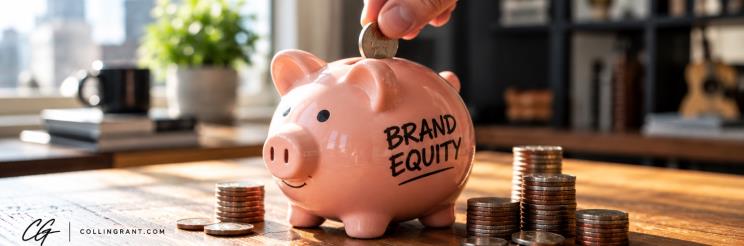
The product worked. Deposit made. The service delivered. Deposit made. The promise matched the experience. Deposit made. Recommend it to someone and it proves right? Another deposit made.
One experience may earn another purchase. Keep delivering and those deposits accumulate. Eventually there is enough equity in the account that the customer doesn’t need to approach every purchase as a new decision.
That’s what Sennheiser had when I went shopping. DJI earned my attention in the moment. Sennheiser entered the decision with years of deposits already in the account. That’s brand equity.
Once there’s equity in the account, both sides can draw on it. The customer draws on that equity every time they buy again without doing all the homework. They trust previous experiences enough to simplify the next decision. Being loyal is easier.
The brand can draw on it too. A new product. A price increase. A policy change. A missed expectation. Each asks the customer to extend some of the trust accumulated in the account. A healthy account can absorb some of that, but it isn’t unlimited.
In The Art of Simple, I wrote about the Cycle of Good Intentions—how individually reasonable decisions can accumulate until they begin working against the thing they were intended to improve. Each change may make sense on its own. Each asks the customer for just a little more patience, flexibility or forgiveness.
Eventually, the account can be overdrawn.
Equity is what you’ve earned. Tolerance is how much of it the customer will let you spend.
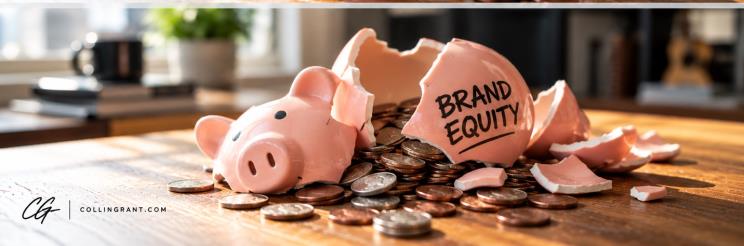
The customer who had stopped comparing starts comparing again. Competitors that had become almost invisible become visible. Prices get noticed. Alternatives get researched. The decision is open again.
The Other Team
Sometimes, preference becomes affiliation.
I’m probably a better example than I realized. I grew up drinking Pepsi. Today, I follow the Coke Family of Racing. I own Coke shirts and swag. Coke went from being the substitute Atlanta restaurants served me to something I identify with.
Pepsi didn’t become terrible. Pepsi is the other team now. That’s some other guy’s brand.
That’s an interesting place for a brand to reach. The product isn’t simply something you buy anymore. It has become part of how you identify yourself—and, just as importantly, how you identify what isn’t you.
That’s my brand.
We are, in part, a collection of our decisions.
Pick Me
A friend of mine who is a nutritionist recently posted a picture of a protein-bar shelf. I couldn’t stop looking at it. Every package seemed to be fighting for attention—bright colors, dessert flavors, giant protein numbers, low-sugar claims, macros and promises. The whole shelf looked like puppies at a shelter jumping against the gate, barking and whining for someone to take them home.
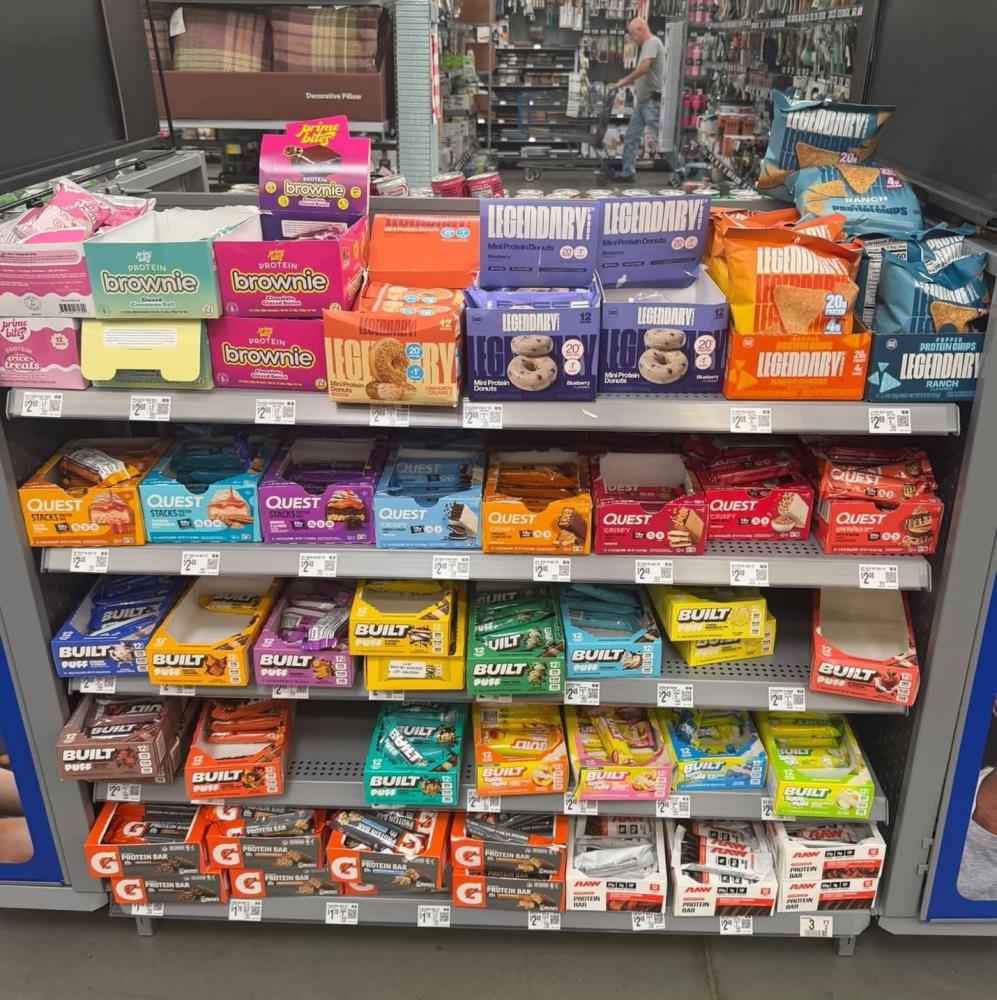
Pick me. Pick me. Pick me.
But the interesting part wasn’t just the packaging. Most of those brands were trying to attach themselves to a decision the customer had already made: I want to make a healthier choice.
The wrapper doesn’t have to create that belief. It just has to convince you that this particular bar belongs inside it. Then the product has to earn another purchase. And another.
Do that enough times and eventually the relationship changes. The package doesn’t have to jump quite as high anymore. The customer isn’t scanning twenty wrappers looking for a winner. They’re looking for you.
PICK ME → PICK ME AGAIN → COME FIND ME.
The brand’s real victory is getting out of the shelf fight.
Don’t Make Me Choose Again
Every brand wants the opportunity to win a new customer. But once you’ve earned one, there’s enormous value in keeping the decision settled.
Your customer already chose you. Don’t make them choose again.
That doesn’t mean the customer is trapped or that competitors disappear. They’re still there. The customer simply has enough experience, belief and trust invested in one brand that there isn’t a compelling reason to reconsider the decision. That’s a remarkably valuable position to hold—and a remarkably expensive one to lose.
Because the moment you give a customer a good enough reason to reconsider, you put everybody else back in the game. The challenger who had been fighting for attention suddenly has it. Prices get compared. Reviews get read. Alternatives that had been dismissed without much thought get another look.
The challenger’s first job may not even be convincing the customer to choose them. It may be convincing the customer that a decision they stopped making is worth making again.
Loyalty isn’t imprisonment. It’s often just the absence of a good enough reason to reopen the decision.
Which brings me back to aisle 9. Coke is there. Pepsi is there. It looks like a choice. But I already know which one I’m reaching for. The transaction may be happening today, but my decision was made a long time ago.
When did you make your choice?
Turn It Up!